Welcome to coLAB-i, the Innovation and Co-Creation Laboratory of the Brazilian Federal Court of Accounts (TCU)
We are a team from Seta – the Secretariat for Strategy, Innovation and Organizational Transformation of the Brazilian Federal Court of Accounts. We exist to spread innovation in Public Administration for the benefit of society. We work by coordinating open innovation projects that generate replicable knowledge and experiences, with emphasis on the role of oversight.

Mission:
Foster citizen participation and strengthen transparency as essential pillars of this process

Vision:
Promote innovation in public administration through interaction among managers, oversight bodies and society.
Who we are
Who runs the coLAB-i:
The coLAB-i is the Innovation and Co-Creation Laboratory of the Brazilian Federal Court of Accounts (TCU), composed of a multidisciplinary team that promotes innovation, organizational culture, and a forward-looking vision in the public sector. The diversity of backgrounds and experiences within the team allows complex challenges to be analyzed from different perspectives and enables the development of more creative and effective solutions.
The laboratory brings together professionals with solid experience in public management, oversight, social impact, innovation, and futures studies, combining technical knowledge, strategic vision, and practical experimentation to strengthen innovation within the Brazilian Federal Court of Accounts (TCU) and the Brazilian public sector.
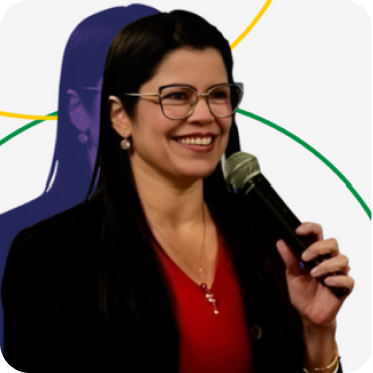
Carolina Pfeilsticker
She is a Federal Auditor of External Control at the Brazilian Federal Court of Accounts (TCU). Currently, she holds the position of Director of Innovation, Culture, and Futures at the Court, the unit that hosts coLAB-i, where she has been working since 2019. She holds postgraduate degrees in Public Control and Auditing, and in Future Thinking: Society, Technology, and Market from PUC-PR.

Thiago Marques
He is a Federal Auditor of External Control at the Brazilian Federal Court of Accounts (TCU), working at the Innovation and Co-Creation Laboratory (coLAB-i). A graduate engineer from CEFET/RJ, he holds postgraduate degrees in Administrative Law and in Public Accounting and Auditing. He is dedicated to initiatives aimed at innovation and the improvement of public management.

Ana Julia
She has been an internship student at coLAB-i for over a year and is a Business Administration student at the University of Brasília (UnB), where she works as a teaching assistant in the Marketing Administration course and serves as a student representative in the Academic Center of Administration. An innovation enthusiast, she is dedicated to exploring new ways of integrating creativity, management, and social impact in collaborative environments.

Renata Zerbini
She has been an internship student at coLAB-i for over a year and is a Business Administration student at the University of Brasília (UnB), where she works as a teaching assistant in the Marketing Administration course and serves as a student representative in the Academic Center of Administration. An innovation enthusiast, she is dedicated to exploring new ways of integrating creativity, management, and social impact in collaborative environments.

Lucas Gabriel
He is an undergraduate student in Public Policy Management at the University of Brasília (UnB) and an internship student at the Innovation and Co-Creation Laboratory of the Brazilian Federal Court of Accounts (TCU). With enthusiasm for the legal field, external and sports policy planning. He has experience supporting teaching practice as a teaching assistant in the subject ‘Fundamentals of Public Administration’ and is a member of the 2025–2026 administration of the Academic Center for Public Policy Management (CAGPP) at UnB
LAB Managers
Carolina Beserra Pfeilsticker
She is a Federal Auditor of External Control at the Brazilian Federal Court of Accounts (TCU). Currently, she holds the position of Director of Innovation, Organizational Culture, and Futures at the TCU, the unit that hosts the Innovation and Co-Creation Laboratory (coLAB-i), where she has been working since 2019. She holds postgraduate degrees in Public Control and Auditing, and in Future Thinking: Society, Technology, and Market from PUC-PR. She earned her undergraduate degree in Public Administration from Fundação Getúlio Vargas in São Paulo (FGV-SP). She began her career in multinational companies in the food, civil construction, electric power, and consulting sectors. She joined the TCU in 2008 through a public examination and has held leadership positions for more than 10 years since then.
Maria Paula Estellita Lins
She is a Federal Auditor of External Control at the Brazilian Federal Court of Accounts (TCU), currently serving as Director of Relations with Citizens, Governments, and Oversight Bodies. She worked at the Innovation and Co-Creation Laboratory (coLAB-i) from 2019 to 2024, coordinating it during the last two years. She holds a Master’s degree in Social, Work, and Organizational Psychology from the University of Brasília (UnB), with specializations in Technologies for Innovation from the Instituto Serzedello Corrêa, also in Corporate Education, Gestalt Therapy, and Psychodrama. She holds an MBA in Positive Psychology and Human Development. She graduated in Pedagogy and Clinical Psychology from UnB and earned a degree in Visual Arts from Faculdade Dulcina de Moraes. She is a member of the management team of the Plain Language Lab and serves as a board member of the Innovation Institute.
Fabiana Ruas Vieira
She is a Federal Auditor of External Control at the Brazilian Federal Court of Accounts (TCU), currently serving as Deputy Chief Auditor of InovaAud, a unit specialized in promoting innovation in oversight. She was Director of CePi during its first six years, where she coordinated the creation of the Innovation and Co-Creation Laboratory coLAB-i. Over her 20-year career at the TCU, she has held several strategic positions, including at the Information Technology Secretariat and the Deputy General Secretariat of Administration. She holds both a Master’s and a Bachelor’s degree in Computer Science from UFMG and is passionate about bringing oversight closer to citizens’ lives, fostering a culture of listening, empathy, and institutional transformation, as well as being an active advocate for women in leadership.
History of the Lab
2025
Engages in citizen participation projects.
Engages in citizen participation projects.
In 2025, coLAB-i operates to consolidate innovation as part of TCU’s institutional strategy. The structuring of the internal ecosystem, the encouragement of citizen participation in oversight projects, and the promotion of practical workshops with servants share a common goal: to create a more collaborative, responsive, and connected environment to address society’s challenges.
2024
Implementation of Public Contracts for Innovative Solutions (CPSI)
Support for the Audit Project, in which the initiative proposes an active communication mechanism between the TCU and citizens, using the name ‘EuFiscalizo’ to strengthen social oversight. The TCU could initiate contacts with selected groups of citizens, such as technicians and experts; such use would broaden citizen participation and overcome the passivity of ombudsman offices. The proposal has the support of coLAB-i for development and legitimization.
2023
February 2023
The Innovation and Co-Creation Laboratory of the Federal Court of Accounts (Tribunal de Contas da União/TCU), coLAB-i, was honored by the Brazilian Space Agency (Agência Espacial Brasileira/AEB) for its contribution to structuring the institution’s first technology commissioning contract.
November 2023
The CPIN Platform won the 2023 Reconhe-Ser Award, granted by the TCU to recognize projects conducted by TCU servants that generate impact for public management or society.
2021-2022
March 2022
Structuring and approval of the Public Contract for Innovative Solution (CPSI), the result of a cooperation agreement between the Ministry of Science, Technology and Innovation (MCTI) and the TCU, aimed at supporting public managers in contracting innovative solutions. Launch of the Journey of the Public Contract for Innovative Solution (CPSI), the result of a cooperation agreement between coLAB-i and Instituto Tellus, with the objective of supporting public managers in contracting innovative solutions.
June 2022
Signing of the Technical Cooperation Agreement between the Ministry of Economy, the Brazilian Agency for Industrial Development (ABDI), and the TCU for the development of the Public Procurement Platform for Innovation (CPIN). Platform CPIN
November 2022
Official launch of the CPIN Platform, the first Brazilian platform dedicated exclusively to public procurement for innovation, offering resources such as the Public Procurement for Innovation Journey (CPI) and enabling access to the analysis matrix of contracting instruments. Article published by the TCU on the launch of CPIN and article on the launch of CPIN with the Ministry of Economy.
2019-2020
Strategic Partnerships and Publications on Technological Procurements (ETEC)
2019
Beginning of partnership with the Brazilian Space Agency (AEB) and the Ministry of Science, Technology and Innovation (MCTI) for training programs through Technological Procurements (ETEC).
March 2020
Publication of the first guidance documents on Technological Procurements (ETEC), coordinated by coLAB-i, aimed at disseminating best practices in contracting through ETEC.
December 2020
Launch of a publication focused on the negotiation stage with potential suppliers in Technological Procurements (ETEC) processes.
2018-2019
2018-2019
Beginning of Innovation Activities and Projects
2018-2019
CoLAB-i began its activities by promoting study groups in Deep Learning and Natural Language Processing (NLP), with emphasis on the ReclANAC project, which aims to automate the classification of complaints from users of Brazilian civil air transport.
September 2019
Participation in the 5th edition of the Seminar on Data Analysis in Public Administration, held in Brasília, promoting the sharing of experiences on practices related to the use of data analysis and mining techniques. Video of the 5th International Seminar on Data Analysis in Public Administration.
2015 – 2018
Innovation applied to oversight
Created in 2015, it was an Innovation and Co-Creation Laboratory worldwide dedicated to external oversight. Between 2015 and 2018, it operated as a research and development hub, supporting structuring projects such as the redesign of strategic planning and the use of geotechnology in infrastructure audits.
The dissemination of the use of data in audits and the development of new methods for selecting audit objects. With a focus on innovation within the TCU, it strengthened the culture of experimentation and continuous improvement, always aligned with the institutional mission of generating value for society.
Tools

Chat TCU:
ChatTCU is a virtual assistant powered by artificial intelligence that facilitates access to information and services provided by the Brazilian Federal Court of Accounts (TCU). It answers questions and provides guidance on regulations, case law, activities, and institutional matters.

Toolkit:
At the Brazilian Federal Court of Accounts (TCU), the Toolkit is a set of practical tools and models designed to support staff in activities such as innovation, management, and communication. It streamlines daily work by providing clear and applicable guidance for institutional routines.

Simple Language:
The coLAB-i uses plain language to make communication clearer, more direct, and accessible to all audiences. This approach avoids complex wording and prioritizes inclusion, especially in services and initiatives aimed at citizens.
Projects
PROJECTS: Ongoing Projects
Together for the Citizen
The Together for the Citizen project is an initiative of the Secretariat for Institutional Relations (SRI), in partnership with the Innovation and Co-Creation Laboratory of the Brazilian Federal Court of Accounts (TCU) – coLAB-i. Its goal is to strengthen connections with society and other partners, in order to drive concrete improvements in public policies and in the services offered to citizens.
This program values dialogue with mayors, managers, councils, and civil society, focusing on active listening and identifying solutions to improve public services. It also encourages the implementation of civic audits carried out by citizens themselves, in addition to building lasting local partnerships.
This program is expected to generate sustainable benefits for the various stakeholders involved, with special emphasis on citizens. The main long-term benefit is citizen participation in the allocation of public resources, thereby strengthening democracy.
Citizen Youth
The Citizen Youth project is an initiative of the Secretariat for Institutional Relations (SRI), in partnership with the Innovation and Co-Creation Laboratory of the Brazilian Federal Court of Accounts (TCU) – coLAB-i. It is aimed at fostering civic education among young students across the country.
The primary objective of the project is to promote awareness of the citizen’s role in overseeing public management, while also introducing students to the work carried out by the Brazilian Federal Court of Accounts (TCU), particularly the role of auditors.
Through the Citizen Youth project, the Brazilian Federal Court of Accounts (TCU) reinforces its commitment to civic education by encouraging young people to become agents of social transformation and to understand both their power and responsibility to actively participate in democratic life.
Data Mining (Training in Data Analysis at the TCU)
The program shows participants how to uncover information hidden within vast amounts of data. To achieve this, they follow a learning path in which they are trained in data analysis and data mining.
The participant may choose one of the following paths: the Excel track, intermediate and advanced course, or data analysis in RStudio, introductory, basic and intermediate course.
The Brazilian Federal Court of Accounts (TCU) seeks to enhance its work through the efficient analysis of public information. To this end, coLAB-i promotes the use of data analysis techniques by organizing events, training programs, study groups, and supporting projects. In 2018, it contributed to the creation of the postgraduate program in Data Analysis at the TCU School.
Geotechnology
The Brazilian Federal Court of Accounts (TCU) Geotechnology Project, called Geocontrole, uses geoprocessing tools to oversee public works and public resources with greater precision. It makes it possible to detect irregularities remotely, reduce costs, and expand the reach of audits.
The initiative uses technologies such as QGIS, Python and Power BI, and also relies on academic partnerships to strengthen technical analysis and innovation.
Auditing infrastructure projects in a continental-sized country is a major challenge for the Brazilian Federal Court of Accounts (TCU). Since 2015, coLAB-i has been engaged in researching and applying georeferencing and geoprocessing techniques using satellite images and drones. These initiatives have involved universities, TCU staff, and joint actions with oversight entities across Latin America.
Design Thinking
Innovation Toolkit – coLAB-i
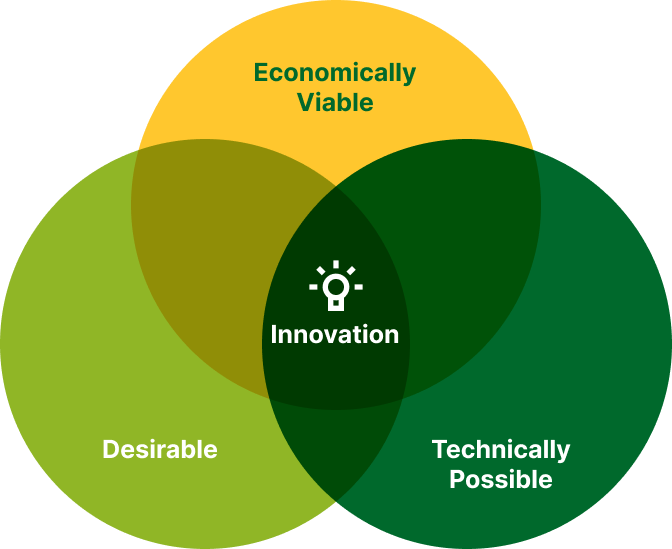
If you are facing a complex problem, you do not need to worry about searching for innovative approaches. Innovation is essential to solving complex challenges. For a solution to be truly innovative, there is a triad of factors that must be considered.
It is necessary to find a balance among three factors:
People: the solution must be desirable for the people who will use it, solving problems or generating benefits.
Business: the solution must be economically viable, with a business model that sustains it.
Technology: the solution must be technically feasible and grounded in existing technology.

Design Thinking Principles
User focus, co-creation and prototyping are important to reduce the risks of a solution not achieving the expected results. In other words, when we adopt an innovative mindset, we reduce the risks involved in a project. Innovating is mitigating risks!

Human-centered
focus

Collaborative
development
of solutions
Prototyping for
spending
efficiency
Phases and Tools of Design Thinking
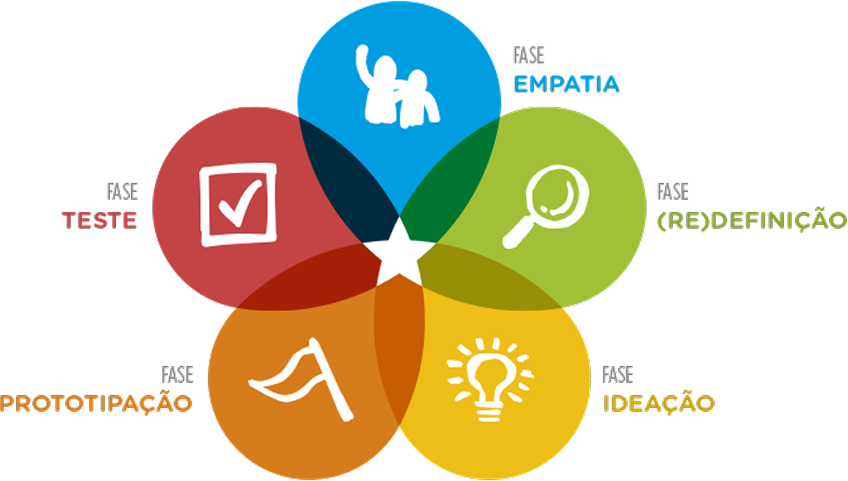
Design Thinking is nothing more than an approach to designing creative solutions, a guide for adopting a new mindset in the field, so that our efforts are directed toward the creation of such solutions.
To this end, we use some tools that guide the development of a project characterized by the adoption of Design Thinking.
We created a TCU presentation about the tools in each phase, and we gathered some of them in a toolkit.
Design for Audits
After using Design in several projects of the Court and promoting various training activities on the subject, we began to support audit teams in applying Design principles and tools during audits.
The auditor needs to focus on understanding their pain points and the expected gains in the execution of their work processes. The auditor can also make better recommendations by bringing the audited entity and other specialists to events that enable a collaborative search for solutions to the problems identified. For this reason, in several TCU audits it is already possible to observe gains when planning and execution are anchored in Design Thinking tools.
Design Thinking Toolkit
Design Thinking is an approach for creating innovative solutions that respects and embraces the multiple dimensions of a complex problem.
When using this approach in the development of a solution, the most important aspect is to adopt its principles.
Publications
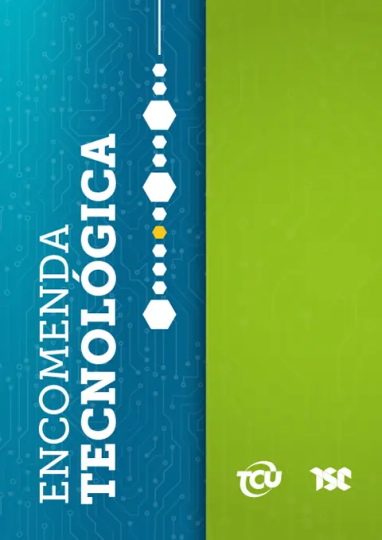
TECHNOLOGICAL PROCUREMENT (ETEC)
Technological Procurement (ETEC) is a legal instrument that allows the Public Administration to contract the development of innovative solutions for problems whose answers do not yet exist in the market. Regulated by the Legal Framework for Innovation, it is used especially in situations of market failure and high technological risk, that is, when there are significant uncertainties about how to solve a public problem.
To support the proper use of ETEC, the Journey for ETEC Contracting was created, detailing each stage of the process based on legislation, best practices, risk management and lessons learned. This journey and other materials were produced through a partnership between the TCU, the Brazilian Space Agency (AEB), the Ministry of Science, Technology and Innovation (MCTI), as well as institutions such as the Office of the Comptroller General (CGU), the Office of the Attorney General (AGU) and the Institute for Applied Economic Research (IPEA).
SEE MORE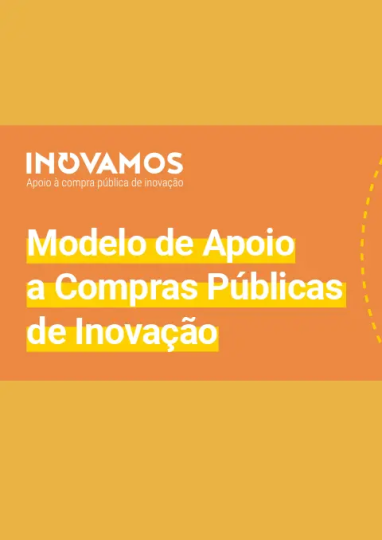
INOVAMOS: MODEL TO SUPPORT PUBLIC PROCUREMENT OF INNOVATION
The document consolidates the partnership between the IDB, through the Division of Competitiveness, Technology and Innovation (CTI), and the coLAB-i of the TCU to strengthen public procurement of innovation in Brazil. It presents the Model to Support Public Procurement of Innovation, built from the identification of the main challenges faced in contracting innovative solutions by Public Administration.
The model proposes practical strategies to support public managers in all stages of the procurement process. Finally, the document describes the next steps for implementing the model in different levels of government.
SEE MORE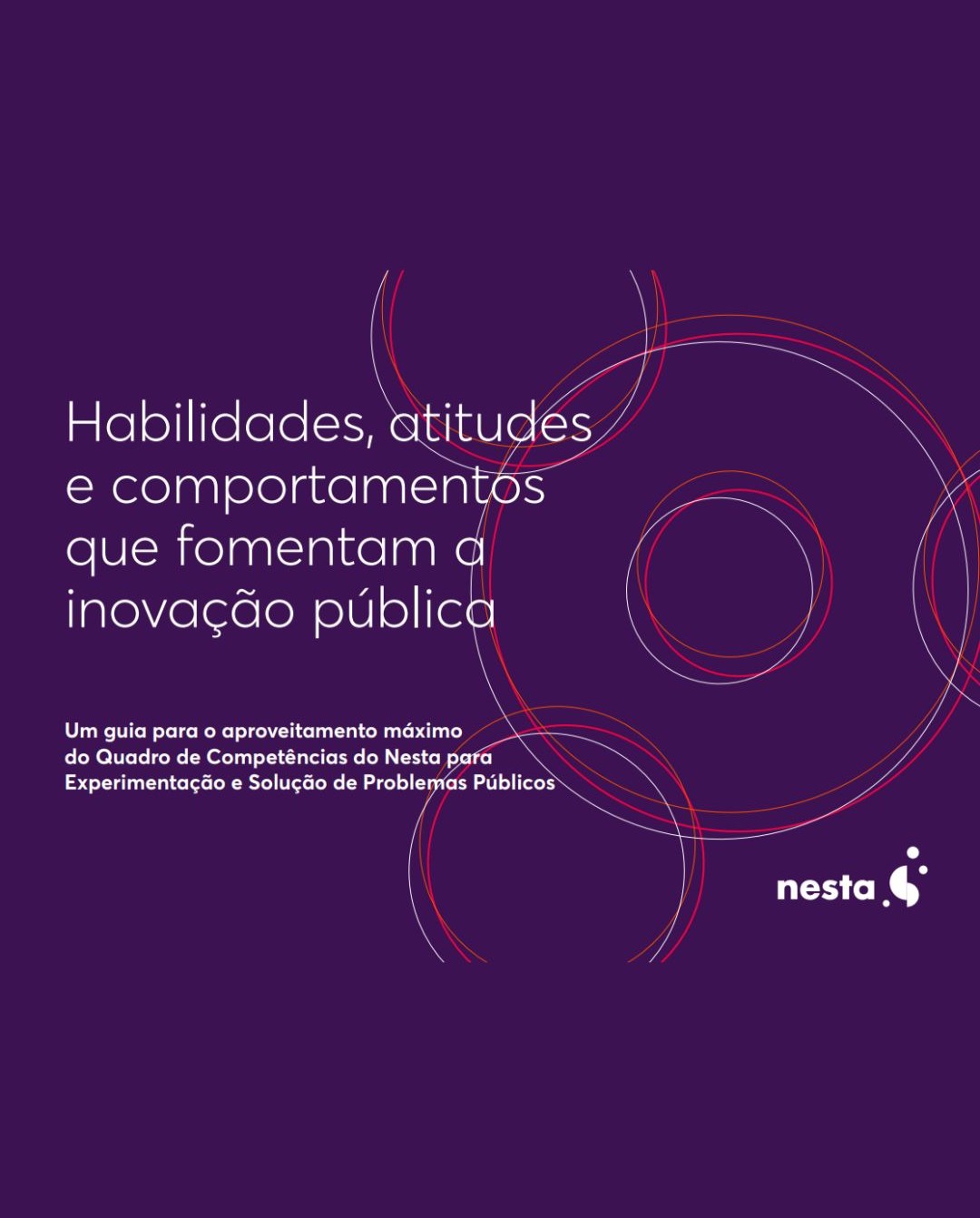
SKILLS, ATTITUDES AND BEHAVIORS THAT FOSTER PUBLIC INNOVATION
The Guide “Skills, attitudes and behaviors that foster public innovation”, created by Nesta and translated by the TCU, helps identify essential competencies for innovative teams in the public sector. The coLAB-i used the material as a reference to map its own competencies and to guide development actions.
The tool can be applied in different contexts, such as team building and diagnosing innovation capacity.
SEE MOREFor reflection
Innovating is solving complex problems
Innovation is a powerful tool for addressing complex challenges, but it does not need to be limited only to such cases. Even simple problems can benefit from innovative approaches, resulting in more efficient, creative and sustainable solutions. For innovation to occur, it is essential that it be desirable, technically feasible and economically sustainable.
It is necessary to find a balance among three factors…